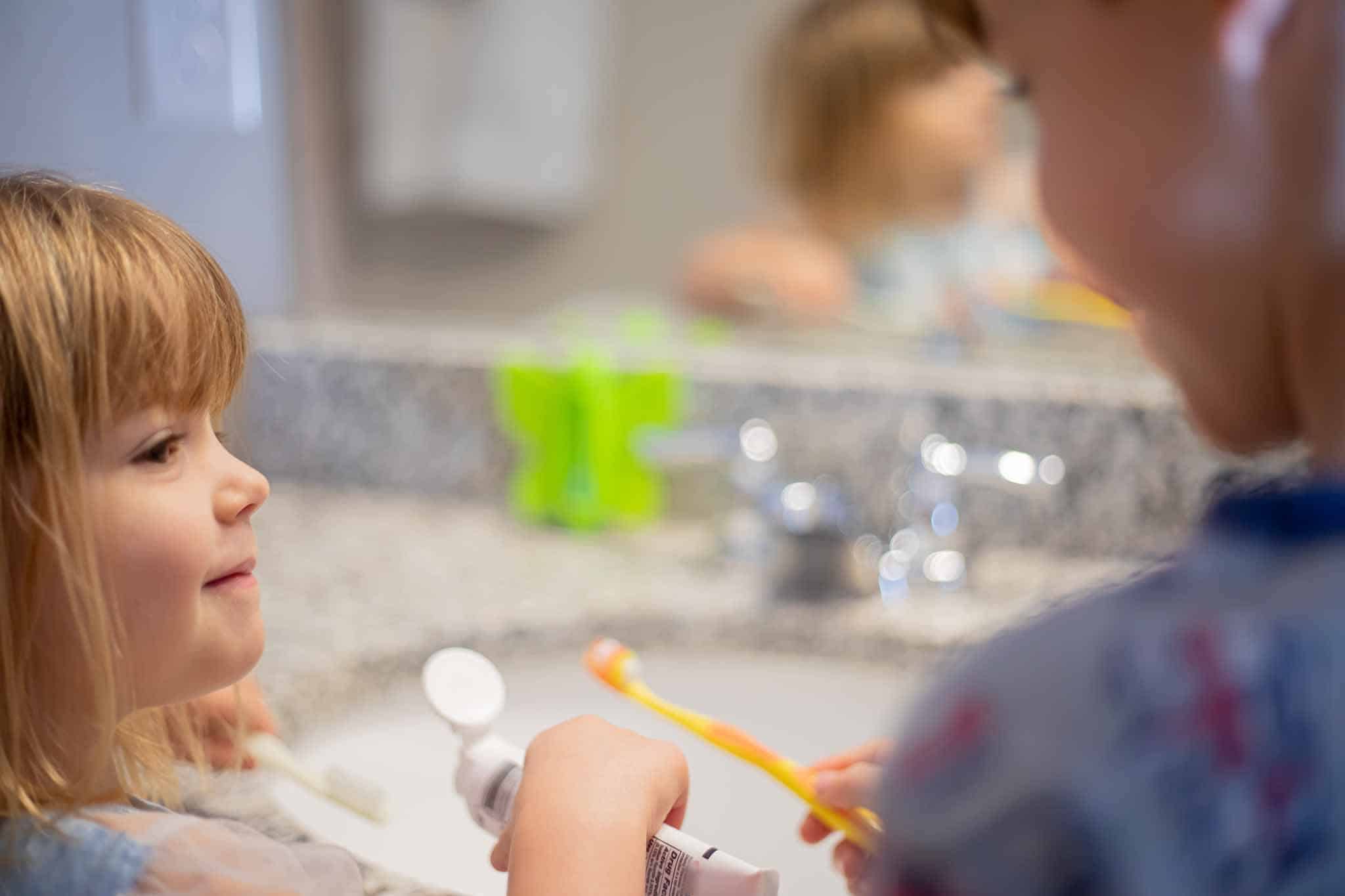

I invite you to discover an excellent article from the Aha! Parenting blog entitled ” Getting your child out the door in the morning,” translated by me with the kind permission of Dr. Laura Markham. Author of the books Peaceful Parent, Happy Kid, Peaceful Parent, Happy Siblings, and the latest Peaceful Parent, Happy Kids Workbook, she offers us advice here on rethinking the morning routine and making it more peaceful.
“Now that school has started again and I have to get both children out of the house and go to work, I’m always late. No matter how early I get up and prepare everything the night before, my 4-year-old is so slow it’s a nightmare .”
No matter how I phrase the request—”Let’s get dressed so we can eat, who can do this the fastest, let’s haraceor who wants to be a cheetah or a tortoise, do you want to do it or will I help you, choose between these two t-shirts, etc.”—he’ll either do the opposite, start whining, or collapse on the floor. He refuses to move, and it’s impossible to help him get dressed, which is essential to avoid wasting another half hour of our morning routine.
Stubborn, he takes off all his clothes because he didn’t do it himself… He says, “I don’t want to get up or go to the toilet,” even though I know he has to do those things, and he’s so slow that I’m losing my mind… Meanwhile, I have my 17-month-old son on my hip, crying and demanding to be fed… I so wish we all had a bucket of love as full as possible, and not an empty one like we find when we arrive at school and work.
Does this sound familiar?
The bad news is that even with every effort, offering choices, turning the situation into a game, and preparing the night before, there’s no guarantee that everything will go smoothly. These elements help enormously, but sometimes the needs of children and adults are simply incompatible.
What does a four-year-old child need in the morning?
Well, everyone is different, but most of us need a little time to transition from sleep to intense activity. Most children resent feeling rushed. Most four-year-olds need to “do it themselves.” They want to make their own decision about when their body needs to pee. And I’ve never met a four-year-old who understands why that meeting Mom has to go to is more important than whether they can find their toy car.
Wouldn’t it be wonderful if all parents could benefit from flexible hours, so that our little ones have more time in the morning to start their day more calmly? Unfortunately, this is not feasible for many families.
-
So what’s the solution? Rethink your morning routine. What if your main task was to create an emotional connection?
This way, your child will have a “full bucket.” Not only will they be more likely to cooperate with you in getting ready, but they’ll also be better equipped to face the challenges of the day. Here’s how to do it.
Put everyone to bed as early as possible.
If you have to wake your children in the morning, it means they’re not getting enough sleep. Really! Human beings wake up when they’ve had enough sleep! Every hour of sleep lost will make your mornings harder. So, if you’re dragging your child out of bed, make bedtime a top priority.
Go to bed earlier, too
If you need to use an alarm clock, you’re not getting enough sleep. (Sorry.) The morning routine requires significant creativity and energy from parents. Your children rely on you to start your own day with a “full bucket.” It’s impossible to be patient when you’re exhausted. And if you’re running around trying to shower and get ready, you can’t give the children the patience they need from you.
Allow extra time
Get up earlier than your children so you’re dressed and emotionally centered before interacting with them. Aim to arrive at work consistently fifteen minutes early. Half the time you won’t make it, but you won’t get angry with your children because you won’t be late. The other half of the time, you’ll start your workday more relaxed and be more productive.
Prepare the night before.
Backpacks, briefcases, packed lunches, clothes laid out, coffee brewed, breakfast planned. Involve the children the night before, too, so they can choose their clothes and find that coveted toy they’ve been hoping for.
Make sure you have five minutes of cuddles with each child when they wake up.
I know, it sounds impossible. But if everything else is already done, you can relax for five minutes. This time, connecting with your child will transform your morning. You fill your child’s bucket before the day begins. And you reconnect after the nighttime separation, giving your child the motivation to cooperate instead of fighting with you. It’s the best way to avoid morning whining and resistance.
Build connections to facilitate transitions
Children find transitions difficult, and the morning routine is full of them. So, if getting out of bed is a challenge, end your morning cuddle by holding hands as you walk downstairs together. Make it a meaningful moment of connection for your child, where you both find something you’re grateful for or something you’re looking forward to today. (Naturally, yours will be related to your child.)
Understand that children need your help to follow the routine
If your goal is to enable your child to start their day well, you must consider that your mission is to help them follow the morning routine with pleasure, not to give them orders.
This might mean bringing his clothes downstairs with you and having him get dressed next to you while you feed the baby, so you can encourage him. “I notice you’ve chosen your blue shirt. You like that shirt… You work so hard to know which shoe fits which foot… Today you’re humming as you get dressed.” Remember, getting dressed is your priority, not his. It’s your presence that motivates him. He’s borrowing your “executive function” to keep himself on track.
Keep your morning routine as simple as possible
So, for example, you can rethink breakfast. I know, you want to serve your child a hot breakfast at the table. Me too. But I have a child who simply wasn’t ready to eat as soon as he woke up. So, on several occasions, he regularly ate a sandwich in the car. No less healthy, more peaceful, and a better start to the day.
Worried about brushing her teeth? I gave her a toothbrush and a cup of water after her sandwich. No toothpaste in the morning for a few months. If you think that’s too much of a compromise, you’ll have to find a solution that works for you, but my point is, there are no hard and fast rules. Why can’t they sleep in the t-shirt and leggings they’ll wear to school? Why not put her hair in a ponytail instead of brushing it? Or braid it after her bath, let her sleep with the braid in, and wear it to school without brushing it?
Give choices
Nobody likes being rushed. Does he want to brush his teeth upstairs in the bathroom, or standing on the kitchen sink stool while you take the baby out of the high chair? Does she want to put her shoes on first, or her jacket first? Give up control whenever you can. You might think he should go to the toilet as soon as he gets out of bed, but he wants to be responsible for his own body. As long as he doesn’t wet his pants, it’s best to let him make that decision himself. You’ll never win a power struggle with someone else over their body.
Play out the morning routine with your child
Over the weekend, take a mother and baby plush toy. Have them act out the morning routine. Ask the baby to resist, to whine, to collapse. Make the mother “lose her mind” (but don’t scare your child by overdoing it).
Your child will be fascinated. Then, have your child take on the role of “Mom” and act out the scenario again, with you playing the child. Make it funny so you can both laugh and release the tension. Be sure to include scenarios where the child goes to school in their pajamas, or Mom goes to work in her pajamas, or the child has to yell at Mom to hurry up and get ready, or Mom says, “We don’t care about this meeting! Let’s tell the boss that finding your toy car is more important!”
Use your imagination to imagine what he can’t have in reality. You might learn something about how to make things work better. You’ll almost certainly see your child show more understanding and cooperation on Monday. At the very least, the laughter will defuse the tension.
Ruthlessly establish your priorities
If you’re a single parent, you don’t need me to tell you to put off anything that isn’t essential. Even if there are two parents at home, if both parents work full-time while the children are young, there’s simply no way to get anything “extra” done during the week. It’s the only way to go to bed early enough to be in a good mood in the morning. And your child depends on your good mood to regulate their own. Don’t worry, these years don’t last forever. You’re laying a wonderful foundation for them to increasingly take ownership of their own morning routine.
Modern life puts pressure on children and parents, straining the bond we have with our children. But we need that bond to temper the frenetic pace of life. Our children need it not only to cooperate but also to thrive. Fortunately, when we prioritize connection, everything else becomes a little easier.