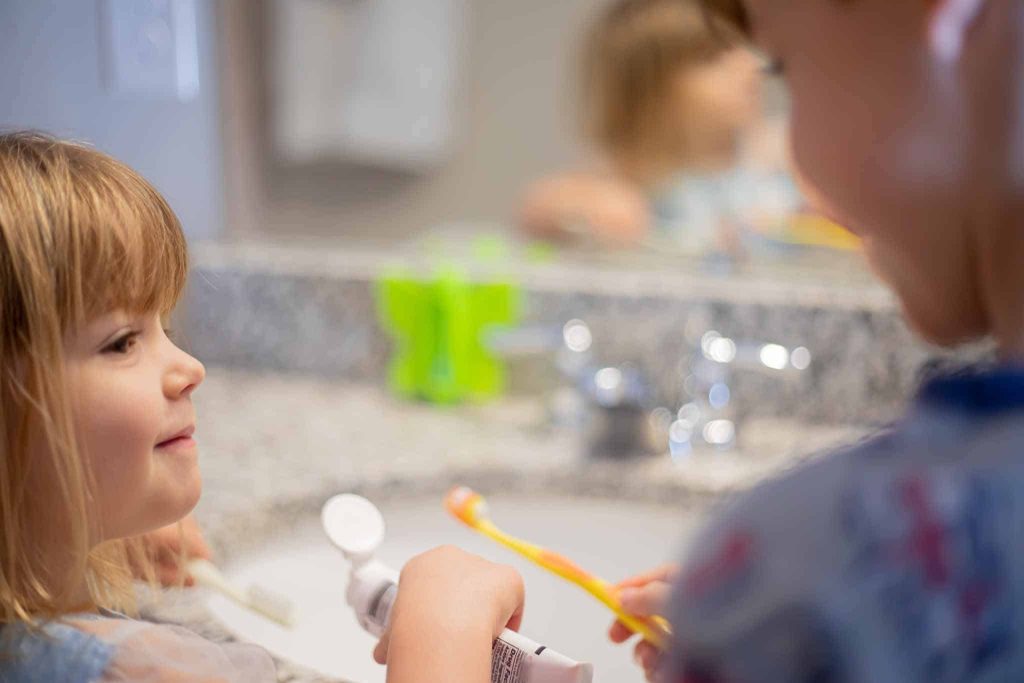
Helping children feel safe and ready to face new challenges is reason enough to provide them with a daily routine. This not only plays a vital role in their development but also teaches children how to manage themselves and their environment constructively. Children who don’t develop basic self-care routines may struggle to take care of themselves as young adults. Structure allows us to internalize constructive habits.
Change is constant in the lives of young children and children in general. Babies and toddlers outgrow pacifiers, bottles, cribs, and their status as the family baby. New teachers and classmates arrive and depart every year. They learn new skills and information at an astonishing pace, from reading and crossing the street to playing soccer and riding a bike. Few children live in the same house throughout their childhood. Most move several times, often to new towns, neighborhoods, and schools.
How to establish a daily routine with your child?
Routines can start from the very first day of a child’s life. You didn’t start a routine in the first few days, don’t worry. They can be established and started at any time. However, the sooner you establish a routine, the better.
This can obviously vary depending on several factors:
- How old is your child?
- What are his current needs?
- Does he have any brothers or sisters at school?
- What cultural aspects play a role in your routine?
Following on from this article, I also invite you to read a guest post I wrote for the Zen Habits blog: The 10 Benefits of Daily Routines with Children. You’ll discover, among other things, how routines with children help create a more zen home. You’ll also learn why routines and rituals build children’s confidence and encourage their cooperation.
Establish important times in the child’s routine: mealtimes, snacks, naps, and bedtime.
If you don’t currently have a schedule, gradually move towards a consistent and regular routine. For example, you can start by establishing regular times for naps and bedtimes.
Then, you can add regular meal and bath times. These times affect your child’s ability to sleep and eat, so they should be a priority to establish.
Next, among the daily routines, we find the morning and evening rituals. Everything that needs to be done in the morning before leaving the house, and everything that needs to be done in the evening before going to bed.
For example, the evening routine is quite simple for a little one to understand: you put on your pajamas after your bath, you read a story before bedtime…
Finally, you can establish daily activities such as tidying up the games.
Anticipate
The key to establishing routines is anticipation. Think about everything that can be prepared the night before :c clothes, signing notebooks, snacks, breakfast, gym bag, books, daycare bag, etc.
You know this, but do you actually do it?
Try it this week! You’ll find your mind is clearer and you’ll have more time for enjoyable things first thing in the morning!
Be patient
Establishing a schedule may be difficult for your child at first, but they will get used to it. Try not to be impatient or frustrated if it takes time for the routine to become “regular” for your child.
Add precious moments to the daily routine
When you incorporate a small, special thing into a daily routine, you create a precious moment . A reading session before snuggling up for a cuddle before bedtime will become a special moment of connection. Hisss will help them relax and feel ready for sleep.
A special routine could also be, for example, a family breakfast on Sunday morning. The child will quickly understand that this is an important family time and that these moments form traditions and strengthen family bonds .
Be consistent and make room for flexibility
For a routine to take hold, it needs to be as regular as possible. However, remain open to flexibility, especially for holidays and special events, so that your child’s mood doesn’t depend solely on the time they eat. It’s also okay to occasionally change the routine by skipping a step or changing the order, says psychologist Nathalie Parent. “The important thing is to tell the child that it’s an exception.”
Lead by example
You also have your own little daily routines. Explain them to your child and show them. For example, when it’s time to tidy up, you can also tidy the kitchen. Remember that you are a role model for your child. To learn more about this topic, take a look at the article on mirror neurons .
Involve your child
Children like to feel they have some control over certain events in their lives. Routine is a good example that will help them build self-confidence. The smaller they are, the more you need to break down the steps, and you shouldn’t have too many steps either. A simple and effective way to involve your child in their daily routine is, of course, to develop it with them. For example, let them choose whether they prefer to prepare their clothes for the next day after their bath or after dinner.
Adjust the routine as needed
Over the months, you’ll begin to see what works and what doesn’t for the family. A daily routine is meant to help the family, not hinder. Make sure your routine is healthy and positive for your child and other family members.